Almost every roof decision in Bakersfield comes down to three materials: asphalt shingle, tile, and metal. They are not interchangeable, and the difference is not only the price per square foot. Heat and wind age asphalt shingle faster here than a mild coastal climate would, and tile and cool-roof surfaces are the common local responses to a roof that sits under a summer sun well above 100 degrees. This guide compares the three on published cost and on behaviour in valley heat and wind, sets out what changes a price, and finishes with the questions that make three quotes comparable. Every figure here is from published 2026 US cost guides; the price that counts is the one on the contractor's quote. Star Roofing Bakersfield is a free matching service, not a roofing company.
What the published ranges say about the three
Published 2026 US cost guides (NerdWallet, citing Angi home-services data) put a roof replacement with typical materials at about $4 to $11 per square foot of roof, and the US average at about $9,500, inside a range of roughly $5,800 to $46,000 once material, pitch and the number of layers to be torn off are taken into account. On the same source, materials alone run about $1 to $30 per square foot and roofing labour about $40 to $90 per hour.
That per-square-foot figure is what makes the choice manageable. A 1,000 sq ft roof prices at roughly four to eleven thousand dollars and a 2,000 sq ft roof at about eight to twenty-two thousand, before the extras.
Asphalt shingle work on its own is quoted at about $4.25 to $25 per square foot, depending on grade and complexity, which is where most of the spread between three quotes for the same house actually comes from.
Asphalt shingle in valley heat and wind
Asphalt is the cheapest of the three and the one most Bakersfield homes already have. It is also the material the local climate is hardest on. Summer heat cooks the asphalt that binds the mat and dries the granules that shield it, so granule loss, curling and brittleness arrive sooner here than in a cooler market. Wind then lifts the edges of shingles that have stopped flexing.
The practical consequence is a shorter working life and more frequent attention at the edges, the ridge and the vents. That is not a reason to avoid asphalt; it is a reason to price the better grades rather than the cheapest bundle, because grade is one of the few variables the homeowner controls.
Replacement is also easier with asphalt: the material is light, quick to work with, and widely stocked, which keeps labour time down and makes a partial replacement straightforward when only one slope has failed.
Tile on a Bakersfield roof
Tile is the material that answers heat most directly. Clay and concrete tile do not soften in the sun the way asphalt does, and their surface can be specified in lighter, more reflective colours, which is the local reason tile shows up on so many valley roofs.
Tile sits at the top of the published material band, and the figures reflect that: materials run from about $1 to $30 per square foot, and tile occupies the upper end. Tile is also heavier and slower to install, so labour hours and the details at hips, ridges and valleys take longer than the same roof in shingle.
Two questions belong with any tile quote, and they are for the contractor rather than for this site: whether the roof structure and the pitch suit the tile product being proposed, and what the tile weighs against what is there now. Both are answered on site, in writing, before a price is signed.
Metal, panels and the wind question
Metal roofing covers standing-seam panels and the profiled sheet products, and it is the third common choice here. Metal reflects much of the sun's heat instead of absorbing it, sheds water well on low slopes, and does not lose granules, which is why it is often raised as a long-life answer to a hot, windy location.
The detail that decides how a metal roof performs is not the panel but the fastening and the edges - clips, fasteners, trim and the way the perimeter is finished - because wind works on the perimeter first on any roof. That makes the contractor's specification the thing to read rather than the product name.
Metal also costs more up front than asphalt. On the published ranges it sits closer to the top of the material band, and labour time for cutting, trim and flashing is longer. Ask what warranty applies to the finish and who registers it.
The cool-roof rule that applies to all three
California's building energy standards (Title 24) apply cool-roof requirements to many re-roofs, and the requirement does not care which of the three materials you choose. It depends on the roof area affected, the slope, and whether the work counts as a re-roof or a repair.
A cool roof reflects more of the sun's heat rather than absorbing it, and rated products exist in shingle, tile and metal finishes. That means the same house can satisfy the requirement three different ways, and the choice between them becomes a cost and appearance question rather than a rules question.
The step that protects the homeowner is simple and it is in writing: ask the contractor to state whether the proposed product meets the cool-roof requirement for that address, and keep the product data sheet with the contract. It is the document that answers the question later.
What actually moves the price
Material is only one of the variables, and often not the largest. What moves a quote on the same house:
- The measured size of the roof, in squares of 100 square feet, rather than the size of the house.
- The pitch. A steep roof is slower and less safe to work on, and the published ranges say plainly that pitch moves the number.
- How many layers have to be torn off and hauled away, and where the disposal container can sit.
- Complexity: hips, valleys, dormers, skylights, chimneys and the flashing each of them needs.
- The material itself, on a materials band of about $1 to $30 per square foot.
- Labour hours, on a published band of about $40 to $90 per hour, which is why crew size and scheduling show up in the total.
- The permit fee, which is charged by the city or county and is a separate line.
Whichever material is chosen, those seven items decide the total.
Comparing quotes across three materials
Three quotes for three different materials are only comparable when they describe the same job.
Ask each contractor for the same breakdown: the measured square count, whether the price is per square or a lump sum, the tear-off and disposal, the underlayment and flashing, ridge venting, the permit fee, the product with the data sheet, and the two warranties - the manufacturer's on the material and the contractor's own on the workmanship.
Then ask the two questions that sort the rest. First, whether the quote is for a repair or a full replacement, and what the contractor saw that decided it. Second, whether the proposed product meets the cool-roof requirement for the address. Both are answered by the contractor, in writing, before anything is signed.
Star Roofing Bakersfield is an independent matching service. We introduce you to licensed local contractors at no charge, and the scope, the schedule and the priced quote come from the contractor.
Frequently asked questions
Is tile or metal worth it over asphalt in Bakersfield?
It depends on how long you intend to stay and what the structure suits. Asphalt is the cheapest up front and the material valley heat ages fastest. Tile and metal sit higher on the published material band of about $1 to $30 per square foot and answer heat differently. The contractor should price all three against the same measured roof.
What does a roof replacement cost per square foot?
Published 2026 US cost guides put typical-material replacement at about $4 to $11 per square foot of roof, with the US average at about $9,500 inside a range of roughly $5,800 to $46,000. Asphalt shingle work alone is quoted at about $4.25 to $25 per square foot by grade and complexity.
Do I need a cool roof in California?
Title 24 applies cool-roof requirements to many re-roofs, and whether it applies to your address depends on the roof area affected, the slope and whether the job is a re-roof or a repair. Ask the contractor to state in writing whether the proposed product meets the requirement, and keep the data sheet.
What changes the price the most?
The measured square count, the pitch, how many layers must be torn off, and the complexity of the flashing. Material matters, and on a materials band of about $1 to $30 per square foot it can matter a lot, but two quotes on the same roof usually differ on scope rather than on product.
Sources
Related

Roofing services in Bakersfield

Roof Replacement
A replacement is the whole covering off and a new one on. Published 2026 US cost guides put it at about $4 - $11 per square foot of roof with typical materials - roughly $4,000 - $11,000 on a 1,000 sq ft roof and $8,000 - $22,000 on a 2,000 sq ft roof.
Roof Repair
Repairs are quoted per repair rather than per square foot. Small leak and flashing repairs commonly land in the hundreds rather than the thousands, and anything covering roughly a quarter of the roof or more is usually priced as a partial replacement instead.
Asphalt Shingle Roofing
Asphalt shingles are the covering on most Bakersfield roofs. Published 2026 guides put asphalt shingle replacement at about $4.25 - $25 per square foot depending on grade and complexity, against about $4 - $11 per square foot for replacement in typical materials.
Tile Roofing
Tile is one of the common local answers to Kern County heat and wind. Tile work is costed on the same published basis as any other covering - about $4 - $11 per square foot of roof in typical materials - with the tile itself sitting somewhere in the published $1 - $30 per square foot material band.
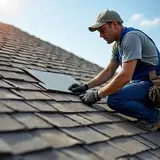
Cool Roof Coating
A cool roof reflects more of the sun's heat instead of absorbing it, and California's building energy standards (Title 24) apply cool-roof requirements to many re-roofs. Whether one applies depends on the roof area affected, the slope, and whether the job is a re-roof or a repair.
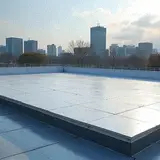
Roof Inspection
When a roof needs looking at - before a sale, after a windstorm, or before an insurance claim - it is a licensed roofing contractor who goes up and writes down what is there. We are a matching service: we do not inspect roofs, and this page is about what an assessment should contain.
Areas we serve
Bakersfield
Roofing in Bakersfield, CA - costs, water and soil notes.
Rosedale
Roofing in Rosedale, CA - costs, water and soil notes.
Oildale
Roofing in Oildale, CA - costs, water and soil notes.
Shafter
Roofing in Shafter, CA - costs, water and soil notes.
Wasco
Roofing in Wasco, CA - costs, water and soil notes.
Delano
Roofing in Delano, CA - costs, water and soil notes.
Lamont
Roofing in Lamont, CA - costs, water and soil notes.
Arvin
Roofing in Arvin, CA - costs, water and soil notes.
Tehachapi
Roofing in Tehachapi, CA - costs, water and soil notes.
Taft
Roofing in Taft, CA - costs, water and soil notes.
Ridgecrest
Roofing in Ridgecrest, CA - costs, water and soil notes.
McFarland
Roofing in McFarland, CA - costs, water and soil notes.
Buttonwillow
Roofing in Buttonwillow, CA - costs, water and soil notes.
Bear Valley Springs
Roofing in Bear Valley Springs, CA - costs, water and soil notes.
Roofing tools & calculators
All 18 free Roofing tools
Cost calculators, comparisons and checklists. No sign-up.
Cost calculator
Estimate the range for a case in about a minute.
Cost guide
Every published appliance range, in one page.
Consultation checklist
What to bring and what to ask before you commit.
Knowledge quiz
Ten questions on costs, timing and coverage.
Which roof job do I need
Eight questions that point to an appliance path.
Cost & Payment tools
Cost estimator, financing and payment planning, insurance and what you may still owe
Cost & coverage tools
Cost driver planner, insurance and code checker, multi-stage cost planner
Compare & choose tools
Treatment finder and practice comparison scorecard
Prepare & safety tools
Appointment question builder, readiness checklist, medical-history and medication notes
Checklists & Answers tools
Practice questions, records and imaging checklist, second opinion, smile check
Roofing resources
Blogs
Cost, timing and buying guides for Bakersfield families.
Problems
The bite and smile issues families ask about most.
Watch
Video walkthroughs and what to expect.
FAQ
The questions we get asked most.
How it works
The request, the match, the quotes.
About
Who this free matching service is for in Bakersfield.