In a valley that runs summer highs well above 100 degrees, the roof is the largest surface of the house facing the sun. California's building energy standards treat that surface as part of the building's cooling load, and the standards known as Title 24 apply cool-roof requirements to many re-roofs. Whether a particular job is caught depends on three things, and all three are answerable in writing.
What a cool roof is
A cool roof reflects more of the sun's heat instead of absorbing it. The difference is in the surface: a dark roof takes in solar energy and passes much of it down into the building, while a cool roof sends a larger share back into the sky.
Cool roofing is a property of a product rather than a type of roof. Asphalt shingles, tile, coatings and single-ply membranes all have cool-rated versions, and what makes them cool-rated is measured performance rather than colour alone. A white roof is usually cool-rated; a light-coloured tile often is; a dark product can be cool-rated if its surface has been engineered for it.
That is why the useful document is the product data sheet rather than the colour sample. The data sheet states the rating, and it is the document a permit application refers to.
Why it comes up in Bakersfield
Bakersfield runs summer highs well above 100 degrees, and the roof faces the sun directly for most of the day. In a climate like that, how much heat a roof reflects and how much it passes down affects how hard a cooling system has to work in the late afternoon.
California's building energy standards, known as Title 24, apply cool-roof requirements to many re-roofs, and the cooling load is the reason the requirement exists. The standards are written for California's climate zones rather than as one rule for the whole state, which is why the same job can be treated differently in two parts of the same county.
Whether a specific address has to meet the requirement, and with which product, is a question about that address rather than about the climate. The next sections deal with how that question gets answered.
How the requirement works on a re-roof
The requirement is not a blanket rule that every roof job has to meet. California's building energy standards apply cool-roof requirements to many re-roofs, and whether a particular job is caught depends on three things.
- The roof area affected: the requirement is tied to how much of the roof the work involves.
- The slope: low-sloped and steep-sloped roofs are treated differently, and the products that satisfy the requirement differ for each.
- Whether the job is a re-roof or a repair.
Because the test has three parts, two houses on the same street can receive different answers. A small repair on one roof may not raise the question at all, while a full re-roof a few doors away does.
None of this is something a homeowner has to work out alone. It is something the contractor states in writing for the address, and something the permit application records.
Re-roof or repair: why the words matter
The difference between a re-roof and a repair is not only about price. It is one of the three things that decide whether the cool-roof requirement applies, and it is also the difference that decides whether a building permit is needed.
Published guidance describes the split in the same terms as the pricing rule: isolated work such as a flashing failure, a few lifted shingles or one valley leak is a repair, while work covering roughly a quarter of the roof or more is treated as a partial replacement priced closer to replacement rates.
So the same distinction appears in two places. If the work is described as a repair in the quote, the quote should also say which part of the roof it covers and whether the requirement was assessed. If it is described as a re-roof, ask for the cool-roof documentation with it.
What to ask for in writing
Ask the contractor to state in writing whether the product proposed for your address meets the cool-roof requirement, and to attach the product data sheet. Ask which part of the roof the requirement applies to, and what the answer would be if the scope changed from a repair to a re-roof.
Then keep the paperwork. The data sheet identifies the product by name and rating, the permit application refers to it, and the final inspection checks that the product specified is the product installed. That is the thread a warranty claim, an insurer or a future buyer would follow.
If a quote treats the cool-roof requirement as a vague extra, that is a question rather than a fault. Ask what the requirement is for the address, which product meets it, and whether the price already includes it.
How it interacts with summer cooling
A cool roof changes the first surface the sun meets; attic ventilation changes what happens to the heat that gets past it. Published guidance treats cool roofing as a reduction in the heat a roof admits rather than a substitute for insulation or ventilation.
That is the honest way to read the interaction. The requirement is a building standard that has to be met where it applies, and the benefit it is written for is a lower cooling load. Neither the published material nor this site promises a specific reduction in a given house, because the actual number depends on insulation, ductwork, the cooling equipment and how the house is used.
Ventilation belongs in the same conversation, because ridge and intake venting appear as lines in a roofing quote and because heat that is not reflected still has to leave the attic.
Cool roofing and the cost of the job
A cool-rated product is a product choice, and product choices sit inside the published cost ranges rather than outside them. Materials are published at about $1 to $30 per square foot, full replacement with typical materials at about $4 to $11 per square foot of roof, and asphalt shingle work installed at about $4.25 to $25 per square foot depending on grade and complexity.
Where a cool-rated product is chosen on a job that has to meet the requirement, it is part of the specified scope rather than an upgrade to be negotiated. Where the requirement does not apply, a cool-rated product can still be chosen, and the difference is then a product decision the contractor can price.
Either way the itemised quote should name the product. A description of a colour is not a product specification, and a product name is what makes the warranty and the documentation traceable.
What this site does and does not do
Star Roofing Bakersfield is an independent matching service, not a roofing company, not a design professional and not an energy consultant. The site does not inspect roofs, does not determine what any address is required to meet, and does not install, repair or guarantee work.
The determination belongs with the contractor and with the authority that issues the permit, and the standard itself belongs to the California Energy Commission's building energy standards. What this site does is introduce homeowners in Bakersfield and the surrounding Kern County towns to licensed roofing contractors.
It also means the useful questions are specific: which product, which part of the roof the requirement applies to, and which line of the quote it sits on. Those are answerable before work starts rather than after it.
The scope, the schedule and the priced quote come from the contractor, and there is no charge for the introduction.
Frequently asked questions
What is a cool roof?
A cool roof reflects more of the sun's heat instead of absorbing it. It is a property of a product rather than a type of roof, and asphalt shingles, tile, coatings and single-ply membranes all have cool-rated versions. The product data sheet is the document that states the rating.
Do I need a cool roof to re-roof in Bakersfield?
California's building energy standards apply cool-roof requirements to many re-roofs, and whether a particular job is caught depends on the roof area affected, the slope, and whether the work is a re-roof or a repair. Ask the contractor to state in writing whether the proposed product meets the requirement for your address.
How do I know the product actually meets the requirement?
Ask for the product data sheet and keep it. It identifies the product by name and rating, the permit application refers to it, and the final inspection checks that the product specified is the product installed. A colour description is not a product specification.
Will a cool roof reduce my cooling bill?
The requirement is written for a lower cooling load, which is not the same as a promised figure for one house. The actual change depends on insulation, ductwork, the cooling equipment and how the house is used, so no published figure applies directly to a specific address.
Sources
Related
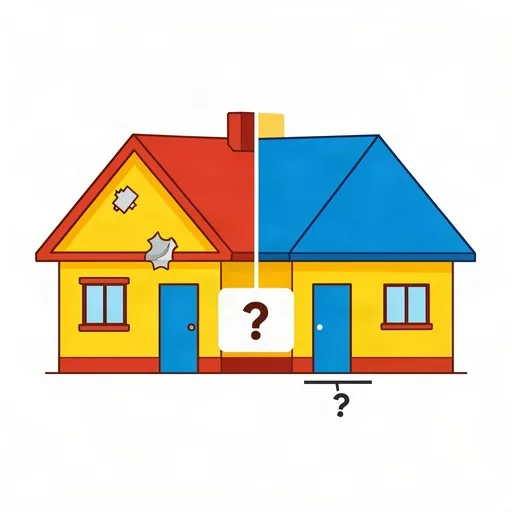


Roofing services in Bakersfield

Roof Replacement
A replacement is the whole covering off and a new one on. Published 2026 US cost guides put it at about $4 - $11 per square foot of roof with typical materials - roughly $4,000 - $11,000 on a 1,000 sq ft roof and $8,000 - $22,000 on a 2,000 sq ft roof.
Roof Repair
Repairs are quoted per repair rather than per square foot. Small leak and flashing repairs commonly land in the hundreds rather than the thousands, and anything covering roughly a quarter of the roof or more is usually priced as a partial replacement instead.
Asphalt Shingle Roofing
Asphalt shingles are the covering on most Bakersfield roofs. Published 2026 guides put asphalt shingle replacement at about $4.25 - $25 per square foot depending on grade and complexity, against about $4 - $11 per square foot for replacement in typical materials.
Tile Roofing
Tile is one of the common local answers to Kern County heat and wind. Tile work is costed on the same published basis as any other covering - about $4 - $11 per square foot of roof in typical materials - with the tile itself sitting somewhere in the published $1 - $30 per square foot material band.
Cool Roof Coating
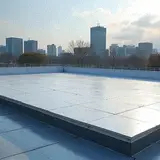
A cool roof reflects more of the sun's heat instead of absorbing it, and California's building energy standards (Title 24) apply cool-roof requirements to many re-roofs. Whether one applies depends on the roof area affected, the slope, and whether the job is a re-roof or a repair.
Roof Inspection
When a roof needs looking at - before a sale, after a windstorm, or before an insurance claim - it is a licensed roofing contractor who goes up and writes down what is there. We are a matching service: we do not inspect roofs, and this page is about what an assessment should contain.
Areas we serve
Bakersfield
Roofing in Bakersfield, CA - costs, water and soil notes.
Rosedale
Roofing in Rosedale, CA - costs, water and soil notes.
Oildale
Roofing in Oildale, CA - costs, water and soil notes.
Shafter
Roofing in Shafter, CA - costs, water and soil notes.
Wasco
Roofing in Wasco, CA - costs, water and soil notes.
Delano
Roofing in Delano, CA - costs, water and soil notes.
Lamont
Roofing in Lamont, CA - costs, water and soil notes.
Arvin
Roofing in Arvin, CA - costs, water and soil notes.
Tehachapi
Roofing in Tehachapi, CA - costs, water and soil notes.
Taft
Roofing in Taft, CA - costs, water and soil notes.
Ridgecrest
Roofing in Ridgecrest, CA - costs, water and soil notes.
McFarland
Roofing in McFarland, CA - costs, water and soil notes.
Buttonwillow
Roofing in Buttonwillow, CA - costs, water and soil notes.
Bear Valley Springs
Roofing in Bear Valley Springs, CA - costs, water and soil notes.
Roofing tools & calculators
All 18 free Roofing tools
Cost calculators, comparisons and checklists. No sign-up.
Cost calculator
Estimate the range for a case in about a minute.
Cost guide
Every published appliance range, in one page.
Consultation checklist
What to bring and what to ask before you commit.
Knowledge quiz
Ten questions on costs, timing and coverage.
Which roof job do I need
Eight questions that point to an appliance path.
Cost & Payment tools
Cost estimator, financing and payment planning, insurance and what you may still owe
Cost & coverage tools
Cost driver planner, insurance and code checker, multi-stage cost planner
Compare & choose tools
Treatment finder and practice comparison scorecard
Prepare & safety tools
Appointment question builder, readiness checklist, medical-history and medication notes
Checklists & Answers tools
Practice questions, records and imaging checklist, second opinion, smile check
Roofing resources
Blogs
Cost, timing and buying guides for Bakersfield families.
Problems
The bite and smile issues families ask about most.
Watch
Video walkthroughs and what to expect.
FAQ
The questions we get asked most.
How it works
The request, the match, the quotes.
About
Who this free matching service is for in Bakersfield.