The question is asked in two different currencies, and that is what makes it hard. A repair is priced per repair. A replacement is priced per square foot of roof. Published guidance draws the line between them with a rule of thumb about the pattern of the damage, and the rest is decided by what the roof is actually doing.
The published rule of thumb
The published rule of thumb is short. Isolated damage is a repair: a flashing failure, a handful of lifted or missing shingles, one valley leak. Widespread granule loss, curling shingles, repeated leaks in different places, or a roof past its expected service life is a replacement.
What makes the rule useful is that it turns on the pattern of the damage rather than the size of any single fault. One leak in a valley is a repair even when the leak is dramatic. Several leaks in several different parts of the roof is a replacement even when none of them looks serious on its own.
The rule does not settle the question by itself. It sorts the case into one of two pricing worlds, and the contractor's written opinion on cause is what decides the rest.
What each option costs, in published terms
The two options are priced in different units, which is why they are hard to compare directly.
A repair is quoted per repair. Published guides describe small leak and flashing repairs as landing in the hundreds rather than the thousands, and describe anything covering roughly a quarter of the roof or more as a partial replacement priced closer to replacement rates.
A replacement is quoted per square foot of roof. Published 2026 cost guides put it at about $4 to $11 per square foot with typical materials, roughly $4,000 to $11,000 for a 1,000 sq ft roof and $8,000 to $22,000 for 2,000 sq ft, with the US average at about $9,500.
Read together, the two units give the real rule: a repair that stays a repair is priced in the hundreds, and anything that grows past about a quarter of the roof is being priced as replacement work whether or not it carries the name.
Age and the service life question
Age enters the decision through service life rather than through a date on a calendar. A covering has an expected life set by its material and by the conditions it has been living in, and a roof that has reached the end of it will keep producing new problems in new places.
The published framing is straightforward: an asphalt shingle roof that has already had several repairs usually costs less over the next ten years as a replacement than as a series of patches. Each patch is priced per repair, so the cost of staying with repairs accumulates in a way a replacement does not.
Age also changes what a warranty will do. Materials carry manufacturer warranties, and the contractor's own workmanship warranty is a separate number that has to be in the contract. Neither warranty covers a roof that has simply reached the end of its life.
Granule loss and what it tells you
Granules are the mineral surface on an asphalt shingle, and they are what stands between the asphalt and the sun. When they come away, the asphalt underneath is exposed to direct ultraviolet light and stiffens faster than it otherwise would.
Published descriptions treat widespread granule loss as a replacement signal rather than a repair signal, because it describes a condition of the whole covering rather than a fault in one place. Granules show up in gutters and at the bottom of downspouts, and the shingle surface left behind looks bare or grey rather than grainy.
Local conditions sharpen this. Bakersfield runs summer highs well above 100 degrees with strong sustained wind, and published material describes heat and wind as ageing asphalt shingles faster than a mild coastal climate would, so a valley roof reaches the same condition at a younger age.
Curling, lifted shingles and repeated leaks
Curling is the shape a shingle takes when it has lost the flexibility it was made with. Edges lift, the surface creases, and the shingle no longer lies flat against the one below it. Published descriptions treat curling across a large area as a replacement signal.
Wind matters here. Bakersfield sees strong sustained wind, and wind works on edges that are already brittle. A curled shingle does not flatten out again, and each event leaves it more exposed than the last, which is why the condition tends to move in one direction.
Repeated leaks are the third signal and the most decisive. Leaks in different places are evidence that the covering is failing as a system rather than at a single point, and a roof that has leaked in three places is not repaired by fixing the third one.
Layers, tear-off and what a replacement adds
A replacement is not only a new covering. Published ranges describe tear-off and disposal of the old roof as one of the things that moves the number, and describe a steeply sloped roof as costing more to work on than a low-pitch roof of the same size.
The published figures sit at about $4 to $11 per square foot for full replacement with typical materials, with materials alone at about $1 to $30 per square foot and labour at about $40 to $90 per hour. Asphalt shingle work is published at about $4.25 to $25 per square foot installed.
What replacement adds over a series of repairs is not only a new surface. The underlayment, the flashing and the venting are part of the same job, which is why the honest comparison is between a roof that has been brought back to one condition and a roof with the same weak points still in it.
Insurance answers a different question
Insurance is a separate question from age and is worth keeping separate. Policies pay for sudden damage from a covered event, such as wind, hail or a fallen tree. They do not pay for wear and tear or for age.
Documentation is what decides a claim: date-stamped photographs, the contractor's written opinion on cause, and the permit record. Where a claim is partly for ageing, insurers often pay for the damaged section only, which is why the repair-versus-replace question gets asked first rather than after the decision is made.
A permitted job also leaves a record an insurer can find. That is one reason the permit line belongs in the quote, and it is worth knowing before work starts who is pulling it.
How to decide, and what to ask
Ask for a written opinion on cause before a price. Then ask which of the two pricing units you are being quoted, per repair or per square foot of roof, and ask what the roof would look like in ten years under each option.
Ask the contractor to state whether the work is a repair or a replacement, what the reported condition is, and which parts of the roof each option covers. Those answers in writing are the difference between a decision and a guess.
Star Roofing Bakersfield is an independent matching service, not a roofing company. The site does not inspect, install, repair or guarantee a roof. It introduces homeowners in Bakersfield and the surrounding Kern County towns to licensed roofing contractors; the scope, the schedule and the priced quote come from the contractor you are introduced to, and there is no charge for the introduction.
Frequently asked questions
Should I repair or replace my roof?
The published rule of thumb is that isolated damage is a repair, while widespread granule loss, curling shingles, repeated leaks in different places, or a roof past its expected service life is a replacement. The written opinion on cause from the contractor is what settles the specific case.
How much does a roof repair cost compared with a replacement?
Repairs are quoted per repair. Published guides describe small leak and flashing repairs as landing in the hundreds rather than the thousands, and describe work covering roughly a quarter of the roof or more as a partial replacement priced closer to replacement rates. A full replacement is published at about $4 to $11 per square foot of roof.
Does age alone mean the roof has to be replaced?
Not by itself. Age enters through service life, and the published framing is that an asphalt shingle roof which has already had several repairs usually costs less over the next ten years as a replacement than as a series of patches. Age also means the roof is no longer covered by a warranty for wear.
Will insurance pay for a new roof?
Insurance pays for sudden damage from a covered event such as wind, hail or a fallen tree, not for wear and tear or age. Date-stamped photographs, the contractor's written opinion on cause and the permit record are what an insurer works from, and a partly aged roof is often settled on the damaged section only.
Sources
Related



Roofing services in Bakersfield

Roof Replacement
A replacement is the whole covering off and a new one on. Published 2026 US cost guides put it at about $4 - $11 per square foot of roof with typical materials - roughly $4,000 - $11,000 on a 1,000 sq ft roof and $8,000 - $22,000 on a 2,000 sq ft roof.
Roof Repair
Repairs are quoted per repair rather than per square foot. Small leak and flashing repairs commonly land in the hundreds rather than the thousands, and anything covering roughly a quarter of the roof or more is usually priced as a partial replacement instead.
Asphalt Shingle Roofing
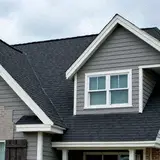
Asphalt shingles are the covering on most Bakersfield roofs. Published 2026 guides put asphalt shingle replacement at about $4.25 - $25 per square foot depending on grade and complexity, against about $4 - $11 per square foot for replacement in typical materials.
Tile Roofing
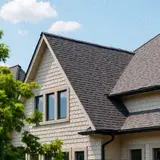
Tile is one of the common local answers to Kern County heat and wind. Tile work is costed on the same published basis as any other covering - about $4 - $11 per square foot of roof in typical materials - with the tile itself sitting somewhere in the published $1 - $30 per square foot material band.
Cool Roof Coating
A cool roof reflects more of the sun's heat instead of absorbing it, and California's building energy standards (Title 24) apply cool-roof requirements to many re-roofs. Whether one applies depends on the roof area affected, the slope, and whether the job is a re-roof or a repair.
Roof Inspection
When a roof needs looking at - before a sale, after a windstorm, or before an insurance claim - it is a licensed roofing contractor who goes up and writes down what is there. We are a matching service: we do not inspect roofs, and this page is about what an assessment should contain.
Areas we serve
Bakersfield
Roofing in Bakersfield, CA - costs, water and soil notes.
Rosedale
Roofing in Rosedale, CA - costs, water and soil notes.
Oildale
Roofing in Oildale, CA - costs, water and soil notes.
Shafter
Roofing in Shafter, CA - costs, water and soil notes.
Wasco
Roofing in Wasco, CA - costs, water and soil notes.
Delano
Roofing in Delano, CA - costs, water and soil notes.
Lamont
Roofing in Lamont, CA - costs, water and soil notes.
Arvin
Roofing in Arvin, CA - costs, water and soil notes.
Tehachapi
Roofing in Tehachapi, CA - costs, water and soil notes.
Taft
Roofing in Taft, CA - costs, water and soil notes.
Ridgecrest
Roofing in Ridgecrest, CA - costs, water and soil notes.
McFarland
Roofing in McFarland, CA - costs, water and soil notes.
Buttonwillow
Roofing in Buttonwillow, CA - costs, water and soil notes.
Bear Valley Springs
Roofing in Bear Valley Springs, CA - costs, water and soil notes.
Roofing tools & calculators
All 18 free Roofing tools
Cost calculators, comparisons and checklists. No sign-up.
Cost calculator
Estimate the range for a case in about a minute.
Cost guide
Every published appliance range, in one page.
Consultation checklist
What to bring and what to ask before you commit.
Knowledge quiz
Ten questions on costs, timing and coverage.
Which roof job do I need
Eight questions that point to an appliance path.
Cost & Payment tools
Cost estimator, financing and payment planning, insurance and what you may still owe
Cost & coverage tools
Cost driver planner, insurance and code checker, multi-stage cost planner
Compare & choose tools
Treatment finder and practice comparison scorecard
Prepare & safety tools
Appointment question builder, readiness checklist, medical-history and medication notes
Checklists & Answers tools
Practice questions, records and imaging checklist, second opinion, smile check
Roofing resources
Blogs
Cost, timing and buying guides for Bakersfield families.
Problems
The bite and smile issues families ask about most.
Watch
Video walkthroughs and what to expect.
FAQ
The questions we get asked most.
How it works
The request, the match, the quotes.
About
Who this free matching service is for in Bakersfield.