The upstairs of a Bakersfield house usually runs hotter than the rooms below it, and most of the reason sits above the ceiling: sun on the roof, an attic that heats up under it, and whatever share of that heat finds its way down into the room. Attic ventilation, roof colour and the ceiling assembly all interact, and a cool-roof surface is one lever among several rather than a cure. This guide covers why upper rooms run hot, how attic ventilation and roof colour work with cooling rather than against it, what a cool-roof coating can and cannot do, and what to ask a contractor to measure before anything is bought. Star Roofing Bakersfield is a free matching service, not a roofing company.
Why the upper storey is the hot one
Three things push heat into an upper room. The first is position: an upstairs room has roof directly above it almost everywhere, so it receives the sun's load that a downstairs room gets only through a window. The second is the attic. In a valley summer well above 100 degrees, the air in an unvented or under-vented attic can sit far hotter than the air outside, and that hot air sits directly on the ceiling below.
The third is the ceiling itself. Heat crosses it, and it crosses it faster in the afternoon and early evening than at any other time, which is why the room feels worst just when the outside temperature is dropping and you would expect relief.
None of that is a fault in the house. It is what a roof does in this climate, and it is why the questions about venting, colour and insulation tend to arrive together.
Attic ventilation in plain terms: intake and exhaust
Attic ventilation is easier to follow once the vocabulary is fixed. A vented attic needs two things: an intake that lets outside air in low down, and an exhaust that lets heated air out high up. The intake is normally at the eaves or in the soffit. The exhaust is usually at or near the ridge.
When both exist and the air can move between them, heat and moisture leave the attic continuously. When the exhaust is added without enough intake, the airflow can short-circuit: air comes in and leaves again without sweeping through the space where the heat has collected, and the attic stays hot while the vent does look present.
That is why the two are treated as one system rather than two products, and why the useful question is never simply whether there is a vent at the ridge, but what feeds it.
What to ask a contractor to measure
An opinion about a hot room is worth much less than a set of readings, and the readings are what a contractor can actually take on site. Ask for the attic air temperature at the same time as the outside temperature, so the two can be compared on the same day and the same hour.
Then ask for the temperature at the intake and at the exhaust, which shows whether air is moving through rather than just entering. Ask for the roof deck or shingle surface temperature, since that is what roof colour changes. Ask what the attic insulation measures and what state it is in, as observed.
Finally, ask for the numbers in writing, with the date and the time, and ask for the same readings after any work is done. Before-and-after readings are the only honest test of whether a change helped.
Roof colour and how much sun a roof takes in
A roof does not simply pass heat through. Its surface absorbs some of the sun's energy and reflects the rest, and the absorbed share is what warms the deck, the attic air and eventually the ceiling below. A dark surface absorbs far more than a light one, which is why roof colour is a cooling variable rather than only an appearance choice.
That is the whole idea behind a cool roof: a surface specified to reflect more of the sun's heat rather than soaking it up. Rated products are tested and published by the Cool Roof Rating Council, and they exist in shingle, tile, coating and metal finishes, so the choice usually comes down to cost, appearance and how the product suits the existing roof.
Colour interacts with material as well. A lighter tile or a reflective coated surface changes the surface temperature of the roof itself, which is measurable, and the measurement is the place to start.
What a cool-roof coating can and cannot do
A coating can do one job well: change the surface of the roof so more of the sun's heat is reflected instead of absorbed. That lowers the roof's surface temperature, and on a roof being re-coated or re-covered it can be the cheapest way to change the surface without changing the material.
It cannot do several things it is often sold as doing. It does not replace insulation, because insulation slows heat crossing the ceiling and a coating changes what the roof surface absorbs. It does not seal a leak, fix flashing or repair a failed valley. It does not fix ductwork that runs through a hot attic, or a ceiling with windows and western walls feeding it heat. And it is a product with a service life, so ask how long it is expected to last and what maintenance it needs.
Asked plainly, most contractors will say what a coating will and will not change on a particular roof.
Title 24 and the product data sheet
California's building energy standards apply cool-roof requirements to many re-roofs, and the requirement depends on the roof area affected, the slope, and whether the job counts as a re-roof or a repair. That means the rule may or may not apply to any one roof, and it is the contractor who determines which.
What a homeowner can do is straightforward, and it happens at quoting time. Ask the contractor to state in writing whether the product proposed meets the cool-roof requirement for that address, and keep the product data sheet with the contract and the permit paperwork.
The data sheet is the useful document later, because it names the product and its rated properties, and it does not depend on anyone's memory of the conversation. It also lets one quote be compared with another on the same terms.
Ridge venting on a re-roof quote
Ridge venting is one of the items that belongs on a roofing quote as its own line, and a re-roof is the practical moment to change it. Once the old surface is off, the ridge and the eaves are open, and the intake side can be dealt with at the same time as the exhaust side.
What to ask: what venting is being installed, whether intake at the eaves is adequate for it, and what the venting adds to the total. Ask whether the number includes the vent product, the labour to cut it in, and any change to the ridge detail on the finished roof.
An existing house that has no ridge vent but does have adequate intake is a case worth asking about directly, and so is the reverse. The answer is a measurement question, not a preference, which is why it belongs in the same conversation as the attic temperatures.
When the roof is not the whole answer
A hot upper room can have more than one cause, and a roof measure only addresses the roof part of it. Insulation sitting on the ceiling, ductwork running through a hot attic, unshaded west-facing glass and the house's own layout all contribute, and none of them are changed by a new surface or a new vent.
The honest framing is that a re-roof is the moment to fix the roof-side contributors: the venting, the surface colour, the ceiling-plane gaps you can see from the attic, and the flashing. Anything beyond that is a separate question.
Ask the contractor which of the readings changed what, and ask what a roof measure is not going to fix. Star Roofing Bakersfield is an independent matching service: we introduce you to licensed local contractors at no charge, and the scope, the schedule and the priced quote - including any venting and cool-roof product - come from the contractor.
Frequently asked questions
Why is my upstairs hotter than downstairs?
An upper room has roof above it on most sides and an attic sitting directly on its ceiling. In a valley summer the attic air can run far hotter than the outside air, so heat crosses the ceiling fastest in the afternoon and early evening. Ventilation and the roof surface both affect that, but so does ceiling insulation.
Does roof colour really make a difference?
It changes what the roof surface absorbs, which is measurable as surface temperature. A lighter or reflective surface absorbs less of the sun's heat than a dark one. Whether that shows up in a room depends on the ceiling and the attic, so ask for before-and-after readings rather than a promise.
Will a cool-roof coating lower my cooling bill?
A coating lowers the roof's surface temperature by reflecting more of the sun's heat, and it can help an under-vented attic. It does not replace insulation, seal leaks or fix ductwork, so no honest answer can promise a bill figure. Ask what it will change on your roof and what it will not.
What should I ask a contractor to measure?
Attic air temperature next to the outside temperature at the same time of day, the temperature at both the intake and the exhaust, the roof deck or surface temperature, and the insulation depth and condition as observed. Ask for the readings in writing, dated, and for the same readings after the work.
Sources
Related


Roofing services in Bakersfield

Roof Replacement
A replacement is the whole covering off and a new one on. Published 2026 US cost guides put it at about $4 - $11 per square foot of roof with typical materials - roughly $4,000 - $11,000 on a 1,000 sq ft roof and $8,000 - $22,000 on a 2,000 sq ft roof.
Roof Repair
Repairs are quoted per repair rather than per square foot. Small leak and flashing repairs commonly land in the hundreds rather than the thousands, and anything covering roughly a quarter of the roof or more is usually priced as a partial replacement instead.
Asphalt Shingle Roofing
Asphalt shingles are the covering on most Bakersfield roofs. Published 2026 guides put asphalt shingle replacement at about $4.25 - $25 per square foot depending on grade and complexity, against about $4 - $11 per square foot for replacement in typical materials.
Tile Roofing
Tile is one of the common local answers to Kern County heat and wind. Tile work is costed on the same published basis as any other covering - about $4 - $11 per square foot of roof in typical materials - with the tile itself sitting somewhere in the published $1 - $30 per square foot material band.
Cool Roof Coating
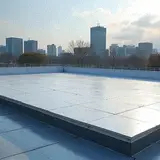
A cool roof reflects more of the sun's heat instead of absorbing it, and California's building energy standards (Title 24) apply cool-roof requirements to many re-roofs. Whether one applies depends on the roof area affected, the slope, and whether the job is a re-roof or a repair.
Roof Inspection
When a roof needs looking at - before a sale, after a windstorm, or before an insurance claim - it is a licensed roofing contractor who goes up and writes down what is there. We are a matching service: we do not inspect roofs, and this page is about what an assessment should contain.
Areas we serve
Bakersfield
Roofing in Bakersfield, CA - costs, water and soil notes.
Rosedale
Roofing in Rosedale, CA - costs, water and soil notes.
Oildale
Roofing in Oildale, CA - costs, water and soil notes.
Shafter
Roofing in Shafter, CA - costs, water and soil notes.
Wasco
Roofing in Wasco, CA - costs, water and soil notes.
Delano
Roofing in Delano, CA - costs, water and soil notes.
Lamont
Roofing in Lamont, CA - costs, water and soil notes.
Arvin
Roofing in Arvin, CA - costs, water and soil notes.
Tehachapi
Roofing in Tehachapi, CA - costs, water and soil notes.
Taft
Roofing in Taft, CA - costs, water and soil notes.
Ridgecrest
Roofing in Ridgecrest, CA - costs, water and soil notes.
McFarland
Roofing in McFarland, CA - costs, water and soil notes.
Buttonwillow
Roofing in Buttonwillow, CA - costs, water and soil notes.
Bear Valley Springs
Roofing in Bear Valley Springs, CA - costs, water and soil notes.
Roofing tools & calculators
All 18 free Roofing tools
Cost calculators, comparisons and checklists. No sign-up.
Cost calculator
Estimate the range for a case in about a minute.
Cost guide
Every published appliance range, in one page.
Consultation checklist
What to bring and what to ask before you commit.
Knowledge quiz
Ten questions on costs, timing and coverage.
Which roof job do I need
Eight questions that point to an appliance path.
Cost & Payment tools
Cost estimator, financing and payment planning, insurance and what you may still owe
Cost & coverage tools
Cost driver planner, insurance and code checker, multi-stage cost planner
Compare & choose tools
Treatment finder and practice comparison scorecard
Prepare & safety tools
Appointment question builder, readiness checklist, medical-history and medication notes
Checklists & Answers tools
Practice questions, records and imaging checklist, second opinion, smile check
Roofing resources
Blogs
Cost, timing and buying guides for Bakersfield families.
Problems
The bite and smile issues families ask about most.
Watch
Video walkthroughs and what to expect.
FAQ
The questions we get asked most.
How it works
The request, the match, the quotes.
About
Who this free matching service is for in Bakersfield.