A valley roof takes two kinds of punishment a coastal roof never sees: sustained heat that dries out the asphalt and the granules shielding it, and wind strong enough to lift the edges those granules were protecting. When a wind or hail event crosses the southern San Joaquin Valley, the real question is not whether the roof is damaged but whether the damage is the kind an insurer pays for. Policies cover sudden damage from a covered event; they do not cover age, and granule loss is exactly where those two look alike. Documentation is what separates them. This guide covers what wind and hail do to a Bakersfield roof, what to photograph before anything is touched, how the contractor's written opinion on cause and the permit record support a claim, and why wear is excluded. Star Roofing Bakersfield is a free matching service, not a roofing company.
What sustained valley wind does to a shingle roof
Bakersfield sees strong sustained wind on top of summer highs well above 100 degrees, and both work on the same material. The heat dries the asphalt and the granules that shield it, so a shingle that would still flex in a mild climate becomes brittle. Wind then does the rest.
The pattern usually starts at the edges: rakes, hips and ridge, where a shingle or a cap is only partly held down, and then at any course the wind can get under. A lifted shingle tends to crease rather than tear, and once it has creased it will not lie flat again, so it lifts again in the next blow.
Lifted and missing shingles leave the underlayment exposed, and a driven rain can push water sideways under the neighbouring courses rather than straight down the slope. Wind also carries grit, palm fronds and tree limbs, which scuff the surface and knock the caps off vents and pipe boots. None of that is unusual on a roof that is already past its middle years.
What hail leaves behind on an asphalt roof
Hail damage on an asphalt roof is quieter than wind damage and much easier to miss from the ground. A stone that lands hard enough bruises the mat underneath the granules; the granules come loose in a small cluster and the shingle keeps its shape. What is left is a soft spot that holds water for a moment, and in a hot climate a moment is enough to start the shingle failing.
The clearest evidence is often in the small metal rather than in the shingles. Vent hoods, flashing, valley metal and gutter runs take dents that a shingle would have absorbed, and those dents are visible without lifting anything. Soft metals also hold a record of direction and size that the shingles do not.
Hail leaves grit behind as well: a fine splatter that collects in the gutters and at the base of the walls, and granules stripped from the same slope in a pattern that follows the storm rather than the years.
A covered event, or ordinary wear
The distinction that decides a claim is written into most policies in plain language: sudden damage from a covered event such as wind, hail or a fallen tree is what gets paid, and wear and tear or age is what does not. Hail bruising and several years of Bakersfield sun can look much alike, which is precisely why the paperwork matters more than the argument.
The published practice where a claim is partly for ageing is that an insurer often pays for the damaged section only. So an adjuster and a contractor are usually answering one question first: is this a repair to a specific area, or has the roof reached the end of its service life?
The working test is straightforward. Isolated damage - a flashing failure, a few lifted shingles, one valley leak - is a repair. Widespread granule loss, curling shingles, repeated leaks in different places or a roof past its service life is a replacement.
What to photograph before anything is touched
The photographs that decide a claim are the ones taken before a repair, a tarp or a clean-up changes the surface, and the ones that carry a date stamp, because they place the damage before the work rather than after it.
What to cover:
- A wide shot of each elevation, far enough back to show the whole slope and the roofline.
- Close shots of anything lifted, creased, dented or missing, taken from the ground or from an upper window rather than from the roof.
- The exposed underlayment where shingles have gone, and the ceiling stain or damp patch inside, if there is one.
- Soft metal: vent hoods, flashing, gutter runs and downspouts.
- Anything else on the property the same storm touched - fencing, screens, a shaded structure, garden furniture, the air-conditioning condenser.
- Debris in place before it is cleared, and any fallen pieces kept rather than thrown away.
Then write the date, the time and the weather into a sentence while it is still fresh.
The contractor's written opinion on cause
The second piece of documentation is a written opinion on cause, from a licensed roofing contractor, on paper, with the licence number on it. It is not the same document as a quote. It should say what was seen, where it was seen, and what the contractor believes caused it: wind, hail, a mechanical failure such as flashing or a boot, or simply the age of the material.
An opinion that names age is still useful. It stops a claim going forward on a theory the roof cannot support, and it gives the homeowner a straight answer about repair or replacement instead of a series of patches.
Roofing contractors in California hold a C-39 licence from the Contractors State License Board, and the licence number, its status, the classification and the bond are free to check at cslb.ca.gov. This site does not inspect roofs; the inspection and the opinion come from the contractor you are introduced to, who puts the cause in writing.
Why the permit record belongs in the file
A permit is an administrative record, and that is exactly what makes it useful. A re-roof, or a structural roof repair, in the City of Bakersfield generally needs a building permit, and the fee is charged by the city rather than by the contractor. Addresses in unincorporated Kern County go through the county instead.
After a claim, an insurer will often ask for that record: it is dated, it names the scope, and it is held by a third party rather than by the homeowner or the contractor. Ask who is pulling the permit, get the number, and keep it beside the photographs and the written opinion.
It settles a smaller question in advance as well. A permit describes the work in the city's own language, which is the same language an adjuster uses on the same scope.
Turning the file into a priced scope
With photographs, a written cause opinion and the permit record in hand, the conversation stops being an argument about what happened and becomes a priced scope of work.
What the itemised quote should show: how many squares were measured (a square is 100 square feet of roof), whether this is a repair or a partial or full replacement, the tear-off and disposal if there is any, the underlayment and the flashing, ridge venting, the permit fee as its own line, the product, and the two warranties separately - the manufacturer's on the material and the contractor's own on the workmanship.
Published 2026 cost guides put a full replacement at about $4 to $11 per square foot of roof with typical materials, and the US average at about $9,500, inside a range of roughly $5,800 to $46,000. The figure that matters is the one on the contractor's quote, after the roof has been seen.
Star Roofing Bakersfield is an independent matching service. We introduce you to licensed local contractors at no charge; the scope, the schedule and the priced quote come from the contractor.
Frequently asked questions
Will insurance pay for hail damage on an old roof?
Policies pay for sudden damage from a covered event, not for age or wear and tear. Where a claim is partly for ageing, an insurer often pays for the damaged section only, which is why the written opinion on cause and the date-stamped photographs carry so much of the weight.
Why do the photographs need to be taken before anything is touched?
Because a repair, a tarp or a clean-up changes the surface the adjuster is being asked to judge. Wide shots of each elevation, close shots of anything lifted or dented, and anything else on the property the same storm touched are what the file can be built from.
What paperwork should I collect for a roof claim?
Date-stamped photographs taken before any work, a written opinion on cause from a licensed C-39 contractor with the licence number on it, and the permit number or record for the work. The permit record is what an insurer commonly asks for.
Is granule loss always storm damage?
No. In this climate granule loss is the visible result of both hail and several years of sun, so a written opinion on cause is what separates a covered event from ordinary wear. That distinction decides whether the claim is paid at all.
Sources
Related



Roofing services in Bakersfield

Roof Replacement
A replacement is the whole covering off and a new one on. Published 2026 US cost guides put it at about $4 - $11 per square foot of roof with typical materials - roughly $4,000 - $11,000 on a 1,000 sq ft roof and $8,000 - $22,000 on a 2,000 sq ft roof.
Roof Repair
Repairs are quoted per repair rather than per square foot. Small leak and flashing repairs commonly land in the hundreds rather than the thousands, and anything covering roughly a quarter of the roof or more is usually priced as a partial replacement instead.
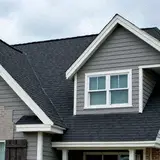
Asphalt Shingle Roofing
Asphalt shingles are the covering on most Bakersfield roofs. Published 2026 guides put asphalt shingle replacement at about $4.25 - $25 per square foot depending on grade and complexity, against about $4 - $11 per square foot for replacement in typical materials.
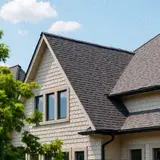
Tile Roofing
Tile is one of the common local answers to Kern County heat and wind. Tile work is costed on the same published basis as any other covering - about $4 - $11 per square foot of roof in typical materials - with the tile itself sitting somewhere in the published $1 - $30 per square foot material band.
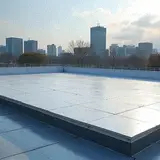
Cool Roof Coating
A cool roof reflects more of the sun's heat instead of absorbing it, and California's building energy standards (Title 24) apply cool-roof requirements to many re-roofs. Whether one applies depends on the roof area affected, the slope, and whether the job is a re-roof or a repair.
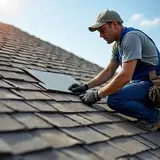
Roof Inspection
When a roof needs looking at - before a sale, after a windstorm, or before an insurance claim - it is a licensed roofing contractor who goes up and writes down what is there. We are a matching service: we do not inspect roofs, and this page is about what an assessment should contain.
Areas we serve
Bakersfield
Roofing in Bakersfield, CA - costs, water and soil notes.
Rosedale
Roofing in Rosedale, CA - costs, water and soil notes.
Oildale
Roofing in Oildale, CA - costs, water and soil notes.
Shafter
Roofing in Shafter, CA - costs, water and soil notes.
Wasco
Roofing in Wasco, CA - costs, water and soil notes.
Delano
Roofing in Delano, CA - costs, water and soil notes.
Lamont
Roofing in Lamont, CA - costs, water and soil notes.
Arvin
Roofing in Arvin, CA - costs, water and soil notes.
Tehachapi
Roofing in Tehachapi, CA - costs, water and soil notes.
Taft
Roofing in Taft, CA - costs, water and soil notes.
Ridgecrest
Roofing in Ridgecrest, CA - costs, water and soil notes.
McFarland
Roofing in McFarland, CA - costs, water and soil notes.
Buttonwillow
Roofing in Buttonwillow, CA - costs, water and soil notes.
Bear Valley Springs
Roofing in Bear Valley Springs, CA - costs, water and soil notes.
Roofing tools & calculators
All 18 free Roofing tools
Cost calculators, comparisons and checklists. No sign-up.
Cost calculator
Estimate the range for a case in about a minute.
Cost guide
Every published appliance range, in one page.
Consultation checklist
What to bring and what to ask before you commit.
Knowledge quiz
Ten questions on costs, timing and coverage.
Which roof job do I need
Eight questions that point to an appliance path.
Cost & Payment tools
Cost estimator, financing and payment planning, insurance and what you may still owe
Cost & coverage tools
Cost driver planner, insurance and code checker, multi-stage cost planner
Compare & choose tools
Treatment finder and practice comparison scorecard
Prepare & safety tools
Appointment question builder, readiness checklist, medical-history and medication notes
Checklists & Answers tools
Practice questions, records and imaging checklist, second opinion, smile check
Roofing resources
Blogs
Cost, timing and buying guides for Bakersfield families.
Problems
The bite and smile issues families ask about most.
Watch
Video walkthroughs and what to expect.
FAQ
The questions we get asked most.
How it works
The request, the match, the quotes.
About
Who this free matching service is for in Bakersfield.